How Midterm Race Calls Will Work on Election Night: AP Counters, Decision Desks and the First Calls at 6 p.m.
When Palm Beach County polls close at 7 p.m. Tuesday, the winners viewers see called will rest on two vote-count operations — the Associated Press, with more than 4,000 reporters at county offices, and Decision Desk HQ — Reuters explained in a guide published Sunday.
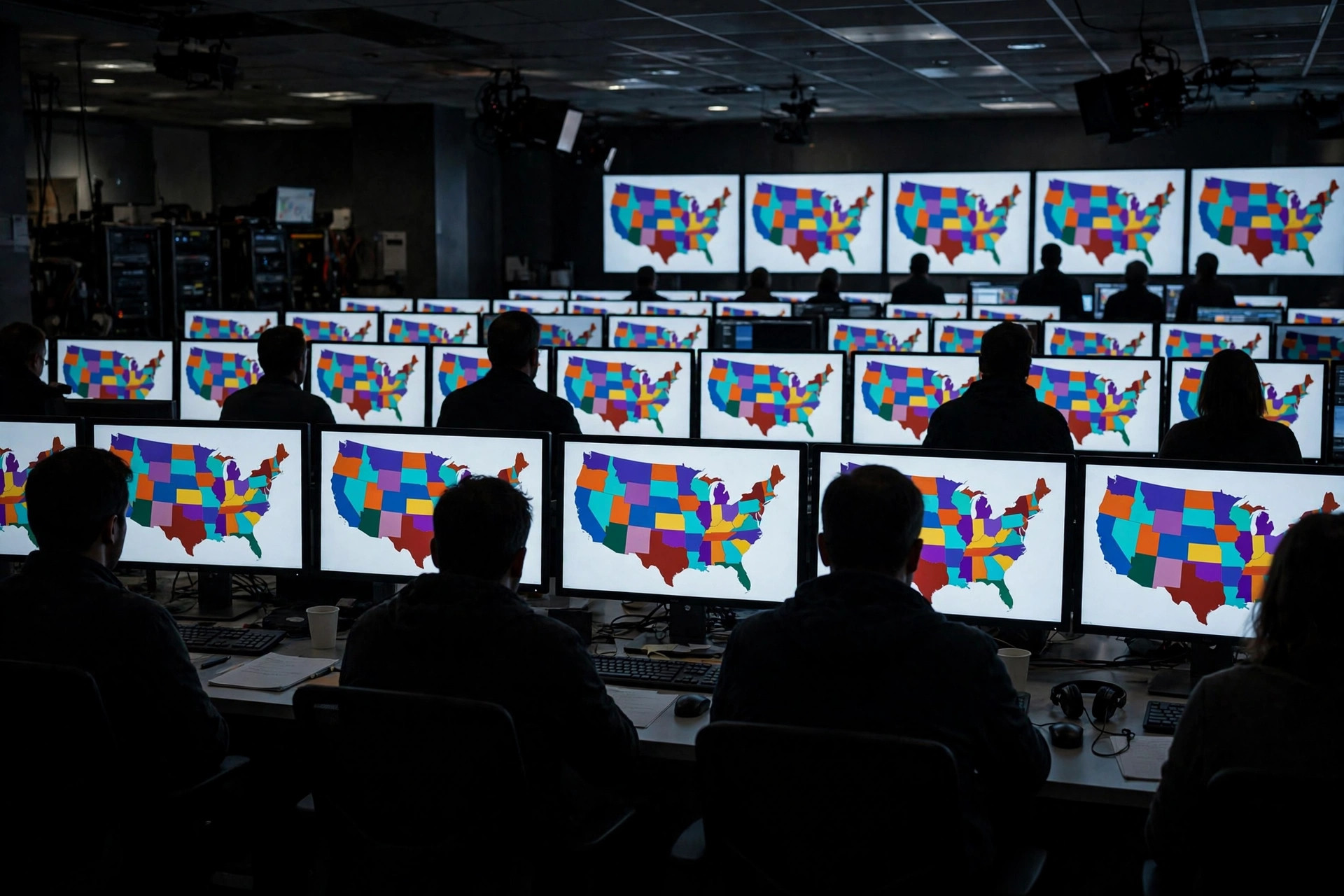
On Tuesday night, newsrooms across the United States will call winners in one of the country's most closely contested midterm cycles long before all the votes are counted, Reuters reported in an explainer published Sunday. Most television networks and digital outlets rely on two providers for vote counts: the Associated Press or the election-data firm Decision Desk HQ.

The AP, a nonprofit newsroom supported by member newspapers, has counted votes in every U.S. election since 1848 and said it would deploy more than 4,000 reporters at county election offices and polling places for the 2026 midterms, gathering data for the decision desks at ABC News, CBS News, Fox, CNN and NBC News. The AP calls a race only when the trailing candidate cannot catch up, estimating the votes still uncounted from past voting patterns and early-vote data. Decision Desk HQ collects counts from official state sources, requires unanimous team agreement and a sign-off from its head of data science, Scott Tranter, before a final projection, and says roughly 80% of votes are processed by pulling data directly from official election sites.
The first calls will start soon after polls begin to close, first in Indiana and Kentucky at 6 p.m. ET and then in Georgia, South Carolina, Vermont and Virginia at 7 p.m. — the same hour Palm Beach County's polls close. Calls can be wrong, though retractions are rare: Decision Desk HQ withdrew a projection in the 2025 Seattle mayor's race and again in this year's New Jersey special-election primary, and the AP retracted a California House call in 2018. Trust is part of the test this year: an October poll for the Medill Local News Initiative and the Alliance for Trust in Media found more than 60% of Americans have some confidence in news organizations to report accurate results, but only 32% have high confidence.